Tesla Slips Optimus Robot Shipments to Late 2027, Citing Hand Mechanism Failures
Elon Musk reveals that the company’s humanoid robot timeline has shifted again, with new production lines in Fremont now targeting a 2027 debut for external industrial clients.
By Marcus Johnson ·
Tesla has officially pushed the timeline for delivering its Optimus humanoid robots to outside customers, with Elon Musk stating on the company’s Q3 2026 earnings call that shipments will likely begin around the end of 2027. This update comes as the automaker continues to navigate significant technical hurdles, specifically regarding the robot’s dexterity and overall durability. While Musk maintains that Tesla is leading the pack in general-purpose robotics, the delay signals that the company is still working through critical hardware and software challenges that have plagued the project since its inception.
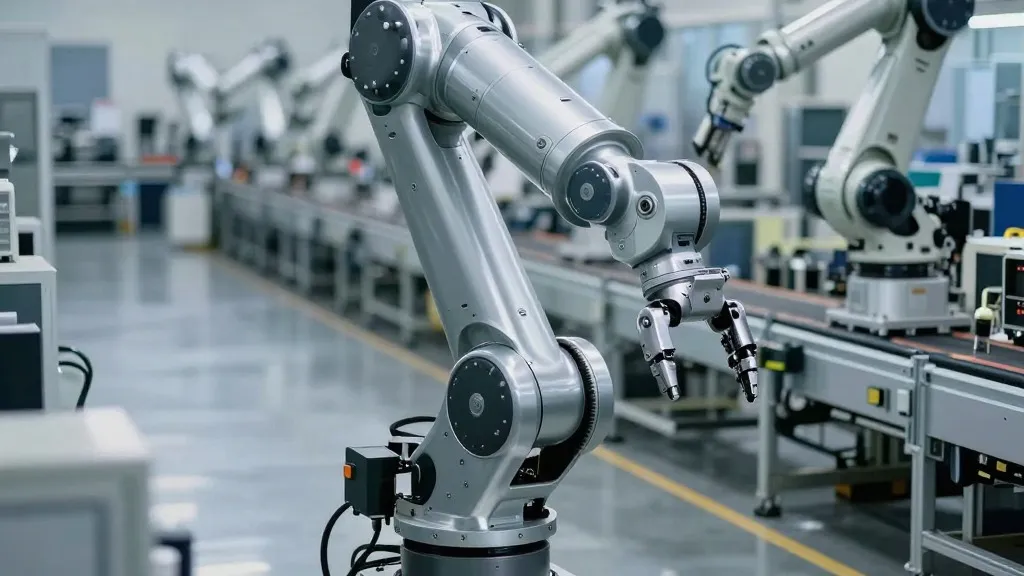
The primary focus of the delay is the robot’s hand, a component that Musk described as the main issue holding back mass production. During the call, a Tesla Optimus engineer noted that the hand and custom gears remain difficult areas to perfect. Musk explained that the fingers require a delicate balance: they must be soft enough to handle fragile objects yet robust enough to withstand constant wear and tear. Unlike human skin, the robot’s skin cannot heal, making reliability a major engineering challenge. The company is also still refining the electromechanical design and the AI architecture to ensure the units can function effectively in real-world scenarios.
Production is currently underway in Fremont, where Tesla has installed most of a line designed to eventually produce one million robots per year. However, Musk cautioned that reaching a rate of 20,000 units per week will take at least another year, possibly longer, due to ongoing design changes. The company has only recently begun producing what it calls "production-quality" bots, implying that previous units were not ready for commercial deployment. To address the lack of a data-generating fleet similar to its autonomous vehicles, Tesla plans to build 10,000 to 20,000 robots to practice tasks in an "Optimus Academy," while also integrating its AI5 chip into the units by April 2027.
Musk pledged to release a video within one to two months showing the robot performing unscripted tasks, arguing that many current industry demos rely on pre-programmed routines that would fail in practical application. He claimed that, to his knowledge, no other company is close to Tesla’s progress on a general-purpose humanoid. However, competitors are making significant strides that challenge this assertion. XPeng, for instance, activated an automated production line for its IRON robot in Guangzhou in September, with over 80% of core processes automated. XPeng targets mass production by the end of 2026 and deliveries in the first half of 2027, a timeline that mirrors or slightly precedes Tesla’s.
Meanwhile, Hyundai’s Boston Dynamics has already begun producing its electric Atlas robot, with all 2026 deployments committed to clients including Google DeepMind. The company opened a training center at Hyundai’s Metaplant in Georgia in September, where Atlas is learning to sequence car parts. Boston Dynamics has taken a more pragmatic approach to the hand issue by prioritizing sturdy grippers for industrial use over human-like dexterity. The company also hired Milan Kovac, Tesla’s former head of Optimus, in January, adding to the competitive pressure.
The shifting timeline is not unprecedented for Tesla. In 2024, Musk predicted internal use in 2025 and high-volume external sales in 2026. By January 2025, he estimated that 10,000 robots would be built, with several thousand performing useful work by year-end, a goal he later admitted was not met. This latest slip to late 2027 raises questions about the reliability of the company's forecasts. While Tesla may have built the most robots, the industry consensus is that making them useful and reliable is the true test.
For now, Tesla faces the same fundamental problems as its rivals: creating hands that survive real work, ensuring robots are reliable enough to be cost-effective, and developing AI that can generalize beyond training data. As the company prepares to show its progress in the coming weeks, investors and observers will be watching closely to see if the new production line can finally turn the Optimus from a prototype into a viable industrial asset.
Source: Electrek